Home | Our Village | Our Schools | Our People | Our Museum | About Us | 225 Club
Our People
It takes many hands to build a village, and Proctor has been fortunate to have so many hands! In honor of those talented and hardworking people who brought honor to Proctor, we are sharing the stories of notable Proctorites we have lost, in hopes that their memories and their ties to Proctor are never forgotten. Click on the images below to learn more about each figure.
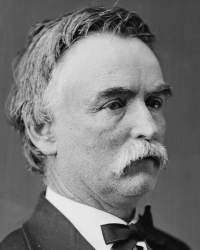
James Proctor Knott
Namesake of Proctor
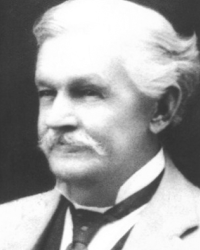
Beriah Magoffin III
Founder of Proctor
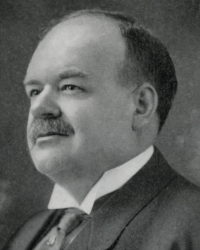
William A. McGonagle
Railway President
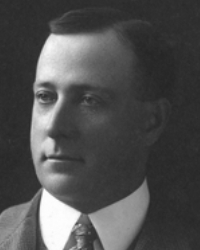
William J. Olcott
Railway President
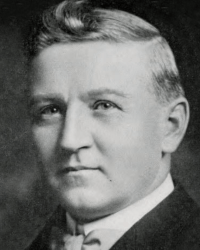
John W. Kreitter
Railway Superintendent
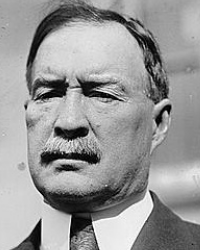
William L. Carrs
U.S. Representative
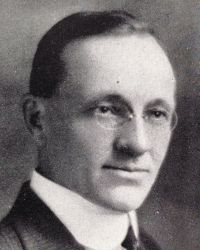
Charles E. Carlson
Railway President
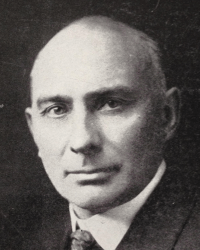
Alexander I. Jedlicka
Superintendent of Proctor Schools
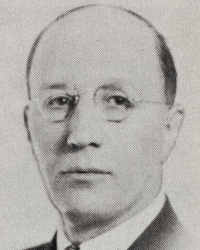
Homer M. Carr
State Representative and State Senator
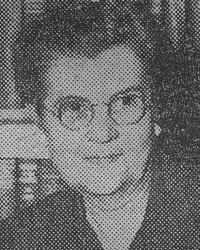
Luella Bender Carr
Poet and Author
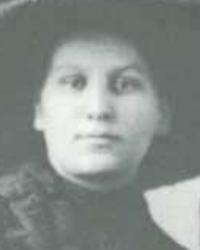
Anna Kristine Larsen
Titanic Survivor
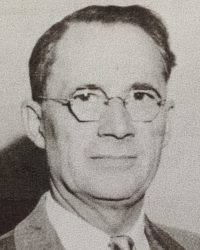
John P. Moody
Music Director at Proctor High School
Amanda “Mandy” Slosson
Cook and Restaurant Owner
Arthur V. Rohweder
Railway Superintendent of Safety
J. Alfred Dillan
Proctor YMCA Director and Boy Scout Troop Founder

John Benson
Owner, Publisher, and Editor of The Proctor Journal
Carl “Cud” Peterson
Boxer and Boxing Promoter

John L. Peyton
Painter and Author
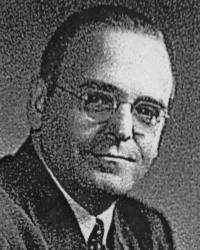
Samuel Spurbeck
Musician and Music Professor
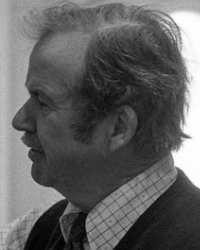
Birney Quick
Co-Founder of Grand Marais Art Colony
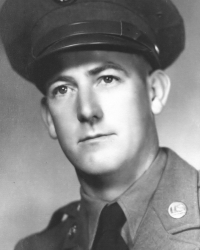
Lawrence C. Klang
WWII Soldier
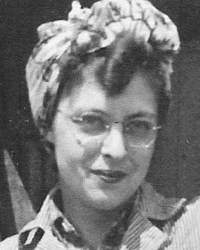
The Missabe Misses
War Time Railway Workers
Wallace “Bud” Streed
Business Owner and Community Leader
Dan Devine
Football Coach
Loyce Houlton
Dancer, Choreographer, and Arts Administrator
Gerald “Peanuts” Peterson
Duluth Dukes Baseball Player

Johnny Copiskey
Founder of The Duluth Accordionaires
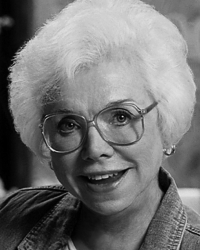
Jean LemMon
Editor of Better Homes and Gardens Magazine
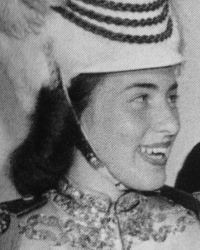
Patricia “Pat” Lowe
Director of Mr. Moody’s Marching Band
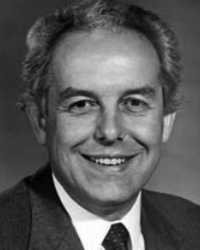
Thomas Stark
President of Winona State University
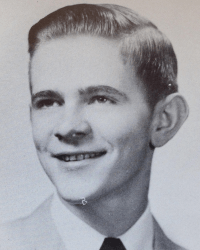
Sherman L. Gonyea
148th Fighter Wing Member
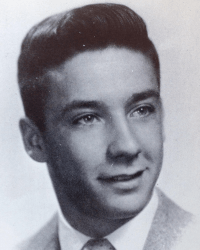
James L. Verville
148th Fighter Wing Member
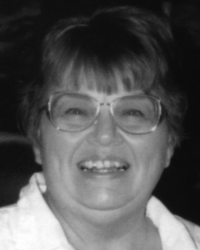
Kathleen “Kathy” Bush
Community Center Coordinator

Thomas “Tom” Dickson
Pharmacist and Pharmacy Leader
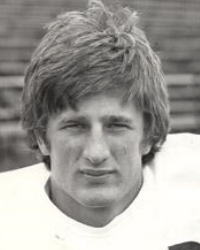
Terry Egerdahl
Football Player and Coach
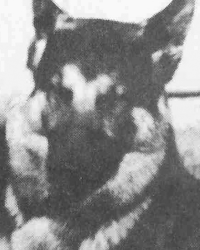
Raymo
Award-Winning Police Dog
James Proctor Knott (1830-1911)
James Proctor Knott (August 29, 1830 – June 18, 1911) was a U.S. Representative from Kentucky, a Governor of Kentucky, and the namesake of Proctorknott, Minnesota (later shortened to Proctor). Proctor Knott inadvertently launched Duluth to fame in 1871 when he made his satirical speech, “The Untold Delights of Duluth,” in front of Congress. He was a close friend of Beriah Magoffin III, who founded the Village of Proctorknott and named it in his friend’s honor.
Beriah Magoffin III (1843-1932)
Beriah Magoffin III (March 13, 1843 – August 29, 1932) was the son of a Governor of Kentucky and the founder of the Village of Proctorknott, Minnesota (later the City of Proctor). As a teenager, Magoffin lived with his family in Superior, Wisconsin. As an adult in 1886, he invested in the land Proctor now occupies for $12 an acre. After selling some of the land for the Duluth, Missabe & Northern Railway, he divided the land around the rail yard into lots and sold them for $1,000 to $1,200 each, or around $8,000 an acre. He named the resulting village after his friend, James Proctor Knott. Though he spent most of his life outside of Minnesota, in 1899, Magoffin’s daughter, Virginia, married Victor Hugo, the son of Duluth Mayor Trevanion W. Hugo.
William A. McGonagle (1861-1930)
William Albert McGonagle (March 28, 1861 – August 2, 1930) was President of the Duluth, Missabe & Northern Railway in Proctor from 1909 to 1930. Throughout numerous developments made to the Railway during his tenure, McGonagle was particularly proud of the employee safety programs delivered under his direction by his Supervisor of Safety Arthur V. Rohweder. In McGonagle’s final year, he was President of both the Duluth, Missabe & Northern Railway and the Duluth & Iron Range Railroad, foreshadowing the future full merger of the roads. The role he played in this merger seemed appropriate considering he worked for the Duluth & Iron Range Railroad prior to working for the Duluth, Missabe & Northern Railway.
William J. Olcott (1862-1935)
William James Olcott (February 22, 1862 – April 29, 1935) was President of the Duluth, Missabe & Northern Railway in Proctor from 1901 to 1909. He was closely tied with John D. Rockefeller throughout his professional life, having worked with Rockefeller’s mining properties in Michigan and on Minnesota’s Iron Range prior to being made president of the Railway. During his time with the Railway, Olcott was credited with supporting the permanence of the Proctor community and was instrumental in pushing for development of Proctor’s YMCA and the community’s first beautification programs.
John W. Kreitter (1862-1930)
John W. Kreitter (October 7, 1862 – March 31, 1930) was Superintendent of the Duluth, Missabe & Northern Railway in Proctor from 1896 to 1928. Prior to Kreitter’s post in Proctor, the Indiana native worked with Nebraska’s Fremont, Elkhorn, and Missouri Valley Railroad. In addition to being Superintendent, Kreitter was the Chairman of the Railway’s Operating Safety Committee and was described upon his retirement as “one of the most active safety advocates on the road.”
William L. Carrs (1865-1931)
William Leighton Carrs (February 5, 1865 – May 31, 1931) was a U.S. Representative who lived in Proctor. A native of Iowa who studied civil and mechanical engineering, Carrs moved to Proctor to work as a locomotive engineer for the Duluth, Missabe & Northern Railway. He represented northeast Minnesota in Congress from 1920 to 1921 and from 1925 to 1929. After his political career, he resumed his post as a locomotive engineer.
Charles E. Carlson (1874-1954)
Charles Edwin Carlson (August 16, 1874 – July 11, 1954) was joint President of the Duluth, Missabe & Northern Railway in Proctor and the Duluth & Iron Range Railroad in Two Harbors (and the resulting Duluth, Missabe & Iron Range Railway after their consolidation in 1938) from 1930 to 1944. Born in Sweden, Carlson moved to Duluth with his parents in 1880 and began work on a railroad two years later, at age eight, as a water boy. During his tenure as president of the Duluth, Missabe & Iron Range Railway (and its predecessors), he delivered the region’s railways through the Great Depression and WWII. Carlson also supported the development of community facilities in Proctor. Because of his work in supporting community recreation, in 1955 the DM&IR Employees’ Association honored Carlson’s legacy by naming Proctor’s recreation area Charles E. Carlson Memorial Park. At his death, The Proctor Journal reported, “If the Duluth, Missabe & Iron Range is a monument to Mr. McGonagle, then Proctor is a living memorial to Mr. Carlson.”
Alexander I. Jedlicka (1878-1962)
Alexander Ivan Jedlicka (February 10, 1878 – April 9, 1962) was superintendent of the Proctor School District from 1918 to 1962. After spending his early life as a farmer in Iowa and southern Minnesota, Jedlicka became a teacher and was eventually sent to Proctor by the Minnesota Commissioner of Education in 1918 to save the school district from bankruptcy. As superintendent, he expanded the school district to include its rural areas and Bay View Heights, introduced rural bussing and hot lunch programs at Proctor, fought for education funding on the state level, and helped champion the founding of the University of Minnesota Duluth. He served as superintendent until his death at 84 years of age.
Homer M. Carr (1887-1964)
Homer Meade Carr (July 22, 1887 – February 19, 1964) was a Proctor-based politician who represented District 59 in the Minnesota State House of Representatives from 1933 to 1934 and in the Minnesota State Senate from 1935 to 1964. A native of Ohio who came to Proctor for work as a locomotive engineer on the Duluth, Missabe & Iron Range Railway, Carr started his political life on the Proctor School Board from 1926 to 1933. By the end of his career, the Minnesota Senate Journal noted, “He was held in such high esteem that the Conservatives appointed him, a Liberal, chairman of the Senate Finance Subcommittee to study claims against the state.”
Luella Bender Carr (1889-?)
Luella D. Carr (née Bender) (1889 – ?) was a poet and author. Born in Cloquet, Carr grew up on Minnesota’s Iron Range, where her father opened grocery stores at new mining locations. As an adult, she moved to Proctor with her husband, State Representative and State Senator Homer Carr, and was 50 when she began writing poetry. Carr released a book of poems in 1941 called When Tamaracks Are Golden. In her remaining years, she saw her poems published in numerous magazines and in 1961 released a young adult novel called A Way to California.
Anna Kristine Larsen (1890-1977)
Anna Kristine Larsen (née Salkjelsvik) (October 30, 1890 – February 21, 1977) was a survivor of the Titanic disaster who lived in Proctor following the incident. Born in Norway, Anna boarded the Titanic as a third class passenger at 21 years of age. Her sister Olivia, who emigrated to Proctor in 1910, saved up and sent Anna money for the trip to America. After escaping the Titanic in collapsible lifeboat C and joining her sister, Anna married a machinist who worked with the Duluth, Missabe & Northern Railway in Proctor. Anna didn’t care to talk about the Titanic in depth, but she occasionally granted an interview to newspaper and television reporters.
John P. Moody (1893-1989)
John Peter Moody (August 19, 1893 – January 14, 1989) was an acclaimed music teacher at Proctor High School from 1932 to 1963. After studying music at MacPhail College of Music, the native of Cloquet started his professional career as a violinist and orchestra leader at the Lyceum Theater in Duluth. He became the director of Proctor Senior High School’s band and orchestra in 1935 and was acclaimed for his direction of the school’s marching band, which travelled throughout the country. One of his most sung legacies is Proctor’s long-standing school song, which he composed in 1935.
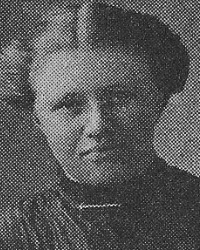
Amanda “Mandy” Slosson (1895-1987)
Amanda A. “Mandy” Slosson (January 13, 1895 – November 9, 1987) was a cook and restaurant owner in Proctor. For 50 years starting in the early 1900s, Slosson worked in numerous Proctor restaurants, including the Proctor Lunch Room and the Cozy Corner Cafe. When restaurant owners decided to sell, she sometimes would buy the business and continue serving the people of Proctor through the years. Even after she retired, she baked her famous pies for Proctor restaurants out of her home kitchen.
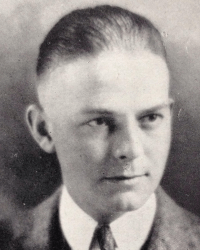
Arthur V. Rohweder (1896-1959)
Arthur Valentine Rohweder (February 14, 1896 – July 15, 1959) was Supervisor of Safety for both the Duluth, Missabe & Northern Railway in Proctor and the Duluth & Iron Range Railroad in Two Harbors starting in 1917; he became Superintendent of Safety and Welfare for the Duluth, Missabe & Iron Range Railway after the companies consolidated. Working on railroad safety with the Chicago & Northwestern Railway prior to coming to Proctor, Rohweder employed a comprehensive program that included the organization of safety committees and the use of a stripped-down passenger coach used to educate workers about safety. He reduced overall accidents on both roads from an all-time high of 643 in 1917 to an all-time low of two in 1938.
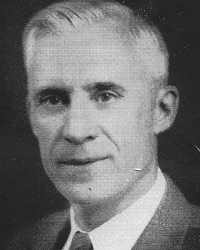
J. Alfred Dillan (1898-2000)
J. Alfred “Al” Dillan (September 5, 1898 – January 22, 2000) was a community leader who ran the Proctor YMCA and started Proctor’s first Boy Scout Troop. A native of Brainerd, Minnesota, he moved to Proctor with his wife Dorothy in 1927 to serve as director of the Proctor YMCA, later known as the DM&IR Employees Association Club House. Community-minded, Dillan was involved at Forbes Methodist Church, the Proctor American Legion, the Proctor Chapter of the Eastern Star, the Proctor Masonic Club, and the Proctor Credit Union. He also founded Proctor’s first Boy Scout Troop.
John Benson (1905-1995)
John Benson (March 17, 1905 – May 10, 1995) was owner, publisher, and editor of The Proctor Journal from 1951 to 1976. A native of Massachusetts, Benson started work full-time in Proctor alongside his wife Blanche in 1953, when he left his copy editor job with the Duluth News Tribune. Benson wasn’t shy about publishing controversial stories and, in turn, was featured frequently in area news about how his publication impacted Proctor. Upon Benson’s retirement, his son Jake took over as owner, publisher, and editor of The Proctor Journal.
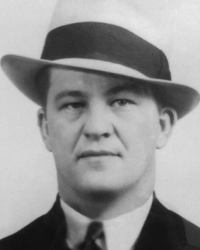
Carl “Cud” Peterson (1905-1963)
Carl “Cud” Peterson (1905 – 1963) was a welterweight boxer and boxing promoter from Proctor. Competing under the name Jack O’Brien, Peterson won numerous amateur and Golden Glove titles in the 1920s. After retiring from boxing due to continued injuries from the sport, he opened a gas station in Proctor and trained young men in the community to box. His fighters were reputed for their clean living and conduct as gentlemen in and out of the ring, which Peterson demanded. The reputation of his training eventually helped him land a fighting franchise in Duluth.
John L. Peyton (1907-2001)
John Lawrence Peyton (May 15, 1907 – August 13, 2001) was a painter and writer from Proctor. After attending Duluth Central High School, Philips Exeter Academy, and Yale, Peyton studied at the Art Students’ League in New York City. From 1957 to 1983, he served as President of the First National Bank of Proctor, which his father Hamilton H. Peyton founded in 1902. During this time, he fostered his love for art and, in 1970, opened the Lake Superior Art Gallery in Duluth. There, Peyton gave art lessons, held art exhibits, and sold artwork, all while writing and illustrating numerous award-winning books.
Samuel W. Spurbeck (1907-1974)
Dr. Samuel Wayne Spurbeck (November 9, 1907 – May 18, 1974) was a violinist and professor emeritus at the Crane School of Music of the State University College at Potsam (New York). A 1926 graduate of Proctor High School, Spurbeck played in Proctor’s first school orchestra in 1923. After graduation, he attended Columbia University, The Juilliard School of Musical Art, and the University of Rochester. Spurbeck taught at the Crane School for 38 years at the Crane School, where he was conductor of the Crane Symphony Orchestra and became a respected music researcher for church music of the 15th century.
Birney Quick (1912-1981)
Birney McNabb Quick (November 9, 1912 – December 2, 1981) was a Proctor native who was co-founder of the Grand Marais Art Colony. After attending the Vesper George School of Art in Boston and studying at numerous art colonies out east, Quick became an art instructor at the College of St. Scholastica and then an artist with the Army Air Corps. After his military service, he joined the faculty of the Minneapolis School of Art, now the Minneapolis College of Art and Design (MCAD). With Byron Bradley, Quick launched the first iteration of the Grand Marais Art Colony in 1947. During his career, he produced more than 10,000 artworks.
Lawrence C. Klang (1915-1944)
Lawrence C. Klang (1915 – November 10, 1944) was the first serviceman from Proctor to be killed during World War II. A technical sergeant serving in the 359th Infantry Regiment of the 90th Infantry Division of the U.S. Army, Klang was killed in action and laid to rest at Lorraine American Cemetery in St. Avold, France. For his service, he was awarded a Silver Star and Purple Heart. In 1945, the Bay View Community Club honored Klang’s memory by renaming the former Mesaba Park as Lawrence Klang Memorial Park.
The Missabe Misses (1941-1945)
The Missabe Misses were women who worked on the Duluth, Missabe & Iron Range Railway when the company faced a critical labor shortage during WWII. The War called away many of the Railway’s highly trained personnel, and when apprentices and laborers were quickly trained to fill the vacated positions, the Missabe Misses were hired to undertake duties like locomotive fire lighters, engine watchmen, wipers, cinder pit hands, and helpers. When the War ended and male workers returned from military service, many of these women were forced out of their jobs, fired for little to no reason or strongly encouraged to resign.
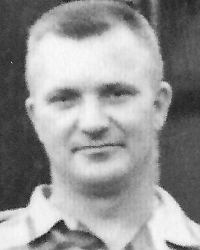
Wallace “Bud” Streed (1922-2015)
Wallace Axel “Bud” Streed (October 25, 1922 – December 9, 2015) was a business owner and community leader in Proctor. A veteran of WWII who owned Eklund’s Super Valu with his wife Marge, Streed served as Commander of the Proctor American Legion, President of the Proctor Development Council, and President of the Proctor Shortline Railroad and was an active member of Proctor Moose Lodge 1302 and Immanuel Lutheran Church. In 1963, Streed and fellow community leaders delivered a monumental feat when they installed the newly-retired Duluth, Missabe & Iron Range (DM&IR) Yellowstone Engine #225, also known as “Old Hard Luck,” into permanent display on Proctor’s Club House Hill. Two years later, Streed was elected and served two terms as President of the Village of Proctor, from 1966 to 1969.
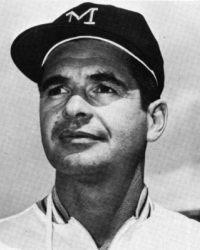
Dan Devine (1924-2002)
Daniel John Devine (December 22, 1924 – May 9, 2002) was a 1942 graduate of Proctor High School who became a football coach for the Green Bay Packers. Born in Wisconsin, Devine lived with his uncle and aunt in Proctor during his formative years. After serving in WWII and graduating from college, he went into coaching and eventually served as head football coach for Arizona State University from 1955 to 1957, University of Missouri from 1958 to 1970, and University of Notre Dame from 1975 to 1980. Devine then worked as head coach of the Green Bay Packers from 1971 to 1974.
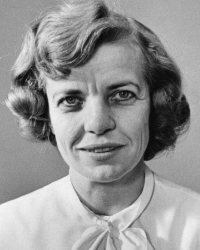
Loyce Houlton (1925-1995)
Loyce Houlton (née Johnson) (June 13, 1925 – March 14, 1995) was a Proctor native who became a dancer-choreographer and the founder of the Minnesota Dance Theatre in Minneapolis. After graduating from Proctor High School in 1942 and attending Carleton College, Johnson studied at the Martha Graham School in New York City. She brought her knowledge back to Minneapolis and, after starting a family, began teaching dance in the 1960s, eventually establishing the Contemporary Dance Playhouse (later the Minnesota Dance Theatre) in 1962. She was acknowledged to be one of the most significant American choreographers of the 20th century and one of the first American women to gain national and international recognition as a choreographer, teacher, and producer.
Gerald “Peanuts” Peterson (1925-1948)
Gerald Olaf “Peanuts” Peterson (December 12, 1925 – July 24, 1948) was a member of the Duluth Dukes minor league baseball team who was killed in the team’s tragic 1948 bus crash. A three-sport athlete during his time at Proctor High School, Peterson left school a year early to join the Merchant Marines during WWII. After a medical exam revealed severe arthritis and a heart ailment, he returned to Duluth, where he eventually regained health and turned to amateur baseball. Duluth Dukes owner Frank Wade signed Peterson to a professional contract in 1946. Peterson was killed with four others after a truck collided with the Dukes team bus in 1948. He was 22 years old.
Johnny Copiskey (1926-1987)
John R. Copiskey (January 24, 1926 – January 10, 1987) was a lifelong Proctor resident who founded and directed The Duluth Accordionaires. An accordionist and private music teacher, Copiskey began his first accordion ensemble with his students from Johnny’s Music, located in West Duluth, in 1949. Dubbed The Duluth Accordionaires, the group grew, and multiple ensembles were eventually created. Over the years, The Duluth Accordionaires shared their sound at festivals, competitions, international tours, and even on The Tonight Show Starring Johnny Carson.
Jean LemMon (1932-2018)
Jean LemMon (née Holmstrand) (November 11, 1932 – January 6, 2018) was an award-winning journalist from Proctor who became the first female editor-in-chief of Better Homes & Gardens magazine. In 1986, after years as a writer for publisher Meredith Corporation, she became editor-in-chief at Country Home magazine. In 1993, she took over Meredith’s Better Homes & Gardens, revamping the look and direction of the publication. Though stationed in Iowa for her job, she maintained a home in the Duluth area throughout her life.
Patricia “Pat” Lowe (1933-2020)
Patricia “Pat” Lowe (née Toor) (July 5, 1933 – March 27, 2020) was the head majorette of the Proctor High School band from 1948 to 1951 and the director of Mr. Moody’s Marching Band from 1988 to 2012. Taught to twirl baton at a young age by her brother Dick Toor, Lowe caught the attention of high school band director Mr. Moody when she was seven years old. She was trained over several years and served as head majorette for the band from 1948 to 1951. In her sophomore year, she led the band on its famous trip to perform at the Junior Rose Bowl in Pasadena, California. She went on to direct Proctor’s alumni band, called Mr. Moody’s Marching Band, from its inception in 1988 to its last parade in 2012.
Thomas Stark (1935-1988)
Dr. Thomas F. Stark (March 18, 1935 – August 21, 1988) was president of Winona State University from 1983 to 1988. A 1953 graduate of Proctor High School, Stark spent his professional life in schools and earned degrees from the University of Minnesota Duluth, Southern Illinois University, and Michigan State University. He eventually became the principal at Silver Bay High School and the schools superintendent in Grand Rapids, Minnesota, and Mankato before becoming president at Winona State University in 1983. He died unexpectedly of a heart attack at age 53.
Sherman L. Gonyea (1937-1971)
Sherman L. Gonyea (August 20, 1937 – December 17, 1971) was a Proctor native and member of the Air National Guard’s 148th Fighter Wing. Gonyea was killed with pilot James Verville when their F-101B jet swerved and crashed during takeoff of a routine flight at the Duluth Air Base.
James L. Verville (1940-1971)
James Lawrence Verville (July 10, 1940 – December 17, 1971) was a Proctor native and member of the Air National Guard’s 148th Fighter Wing. Verville was killed with weapons systems operator Sherman Gonyea when their F-101B jet swerved and crashed during takeoff of a routine flight at the Duluth Air Base.
Kathleen “Kathy” Bush (1947-2003)
Kathleen M. “Kathy” Bush (December 17, 1947 – July 14, 2003) was a dedicated community servant and community leader in Proctor. A trained educator from Minnesota’s Iron Range, Bush served as a member of the Proctor School Board from 1979 to 1994 and served as secretary of the Rails Endowment for Academic, Art and Athletic Development (REA3D, the Proctor Area Educational Foundation) from its inception in 1997. She was an integral part of securing funding from the Minnesota State Legislature for the Proctor Area Community Center and served as its coordinator from 1995 until the time of her death.
Thomas Dickson (1950-2017)
Thomas “Tom” Dickson (April 3, 1950 – March 5, 2017) was a Proctor native, pharmacist, and leader of pharmacy in Minnesota. The son of Proctor’s Dr. Franklin Dickson, Dickson grew up in Proctor and then furthered his education at the University of Minnesota Duluth before attending the University of Minnesota for Pharmacy. In his career, he served as director of pharmacy for numerous Duluth area hospitals, served as president of the Minnesota Society of Health System Pharmacists, and was appointed by the Governor to serve as president of the Minnesota Board of Pharmacy. As an advocate for education, Dickson also mentored student pharmacists and served on the Proctor School Board.
Terry Egerdahl (1953-1980)
Terry Egerdahl (December 4, 1953 – December 15, 1980) was a Proctor native who became a professional football player and then a football coach at Proctor High School. Egerdahl competed as a three-sport athlete at Proctor High School, a two-sport athlete at the University of Minnesota Duluth, and a professional football player for the Minnesota Vikings in 1976 and the Chicago Bears in 1977. After his sports career, he served as Proctor’s community education director and football coach from 1977 through 1980. On December 15, 1980, Egerdahl was warming up for a pick-up basketball game at the Duluth Air Base when he collapsed and died from a heart attack. He was 27 years old. At the time, he was involved in the project to renovate Proctor’s football field, which was named in his honor at completion.
Raymo (1980-1987)
Raymo (March 10, 1980 – October 29, 1987) was Proctor’s award-winning police dog from 1982 to 1987. A German shepherd, Raymo was half of one of the nation’s top police canine teams – alongside his partner Brad Tafs – for years. During his time on the force, he took first in several regional competitions and as high as third place in national competitions. During his tenure, Officer Tafs and Raymo gave nearly 900 performances for area clubs and schools.
Who is missing from this list? Send us the stories of additional notable Proctorites by filling out this form. Please note that only individuals who are deceased may join this list and that a high resolution photo of your nominee may be requested.
© 2022 Proctor Area Historical Society // Support the Proctor Area Historical Society! // Proctor Curfew Siren
 Proctor Area Historical Society